<?xml version="1.0" encoding="utf-8"?>
<feed xmlns="http://www.w3.org/2005/Atom">

  <title><![CDATA[tilde silver]]></title>
  <link href="http://tilde.club/~silver//atom.xml" rel="self" />
  <link href="http://tilde.club/~silver/" />
  <updated>2019-09-21T12:08:51-04:00</updated>
  <id>http://tilde.club/~silver/</id>
  <author>
    <name><![CDATA[Karen Cravens]]></name>
    <email><![CDATA[silver@phoenyx.net]]></email>
  </author>
  <generator uri="https://github.com/jmacdotorg/plerd">Plerd</generator>

  
  <entry>
    <title type="html"><![CDATA[I have a 3d printer]]></title>
    <link href="http://tilde.club/~silver/2019-09-18-i-have-a-3d-printer.html"/>
    <published>2019-09-18T14:16:38-04:00</published>
    <updated>2019-09-18T14:49:39-04:00</updated>
    <id>http://tilde.club/~silver/2019-09-18-i-have-a-3d-printer.html</id>
    <content type="html"><![CDATA[<p>In the revived-tilde mailing list, we had a round of &#8220;about me&#8221; posts in which I said something about having quit coding (professionally) and starting up an Etsy shop which, I didn&#8217;t explain in detail because it woulda sounded like a commercial, but I find I want to justify it as &#8220;no, it really <em>is</em> nerdy.&#8221; Which it is.</p>

<p>My 3d printer operates on 30-40w rayon, polyester, or cotton filament. It uses proprietary(ish) files but there&#8217;s <a href="https://inkstitch.org">an open-source project</a> that produces them from SVG files so I do most of my CAD work in Inkscape. I got tired of running a USB stick back and forth to it so I hooked up a Pi Zero in USB Gadget mode, though at the moment I haven&#8217;t replaced its corrupted SD card so I&#8217;m back to the USB stick.</p>

<p>In honor of the revivification of tilde, I ran a custom print:</p>

<p><img src="images/IMG_3606.JPG" alt="Mini composition book cover" /></p>

<p>It&#8217;s a mini composition book cover; takes Dollar Tree notebooks (they come in a 3-pack) and closes with a Zebra or G2 size pen. I&#8217;ve had a lot of fun making them.</p>

<p><img src="images/IMG_3604.JPG" alt="Mini composition book cover inside" /></p>

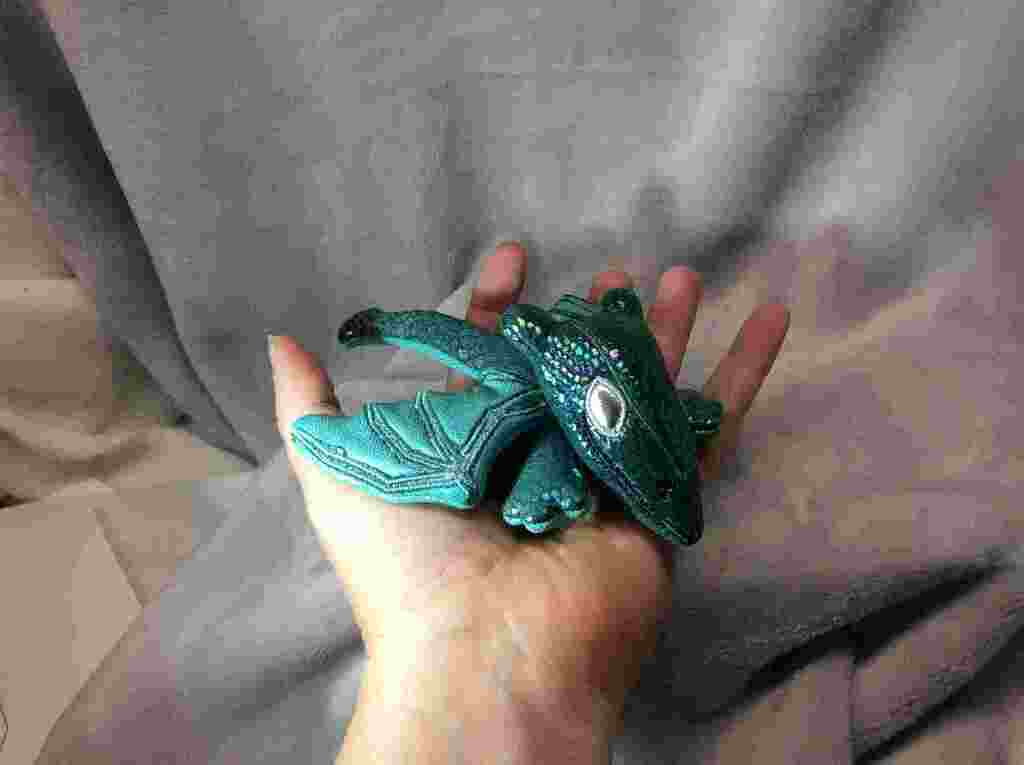
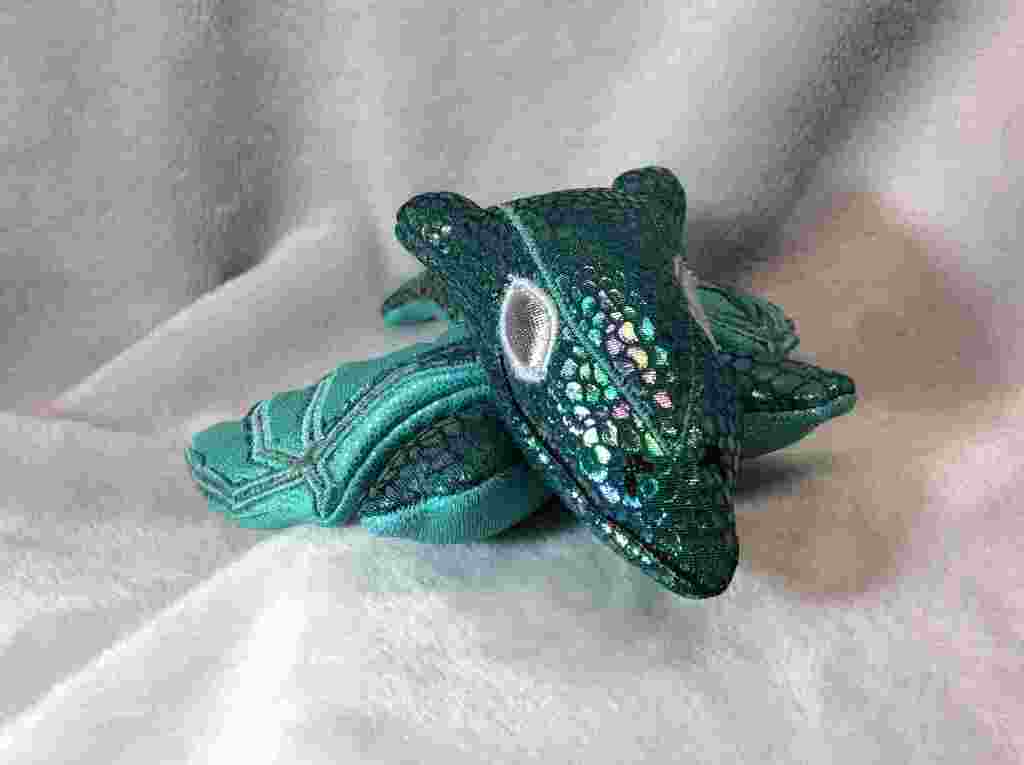
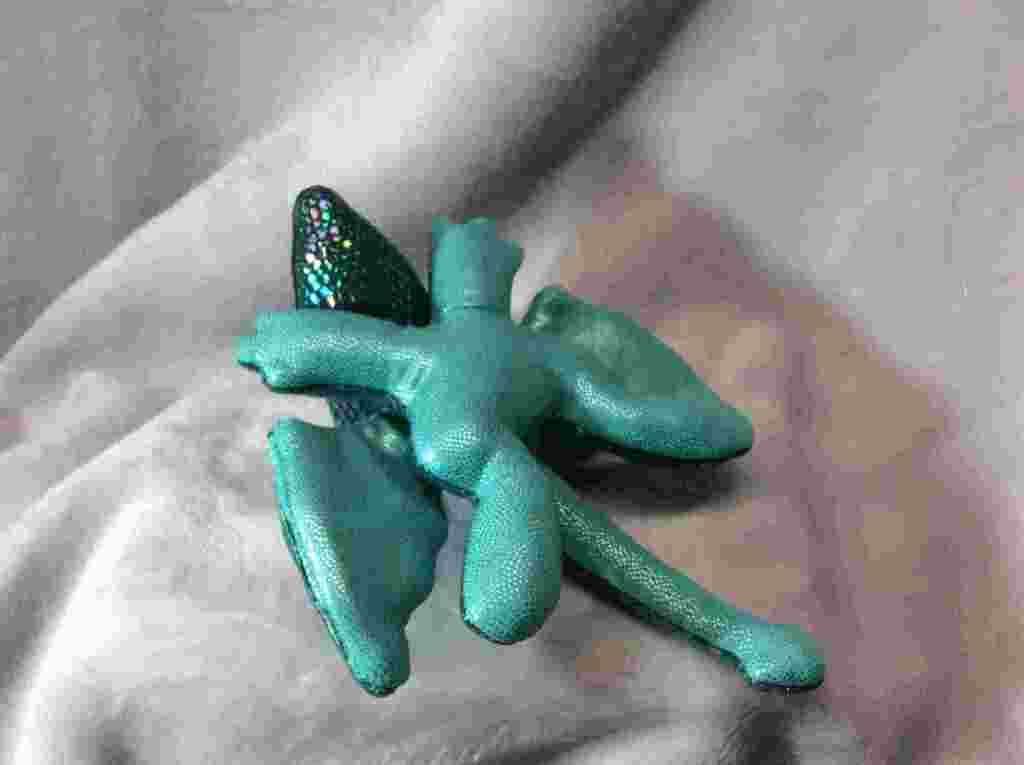
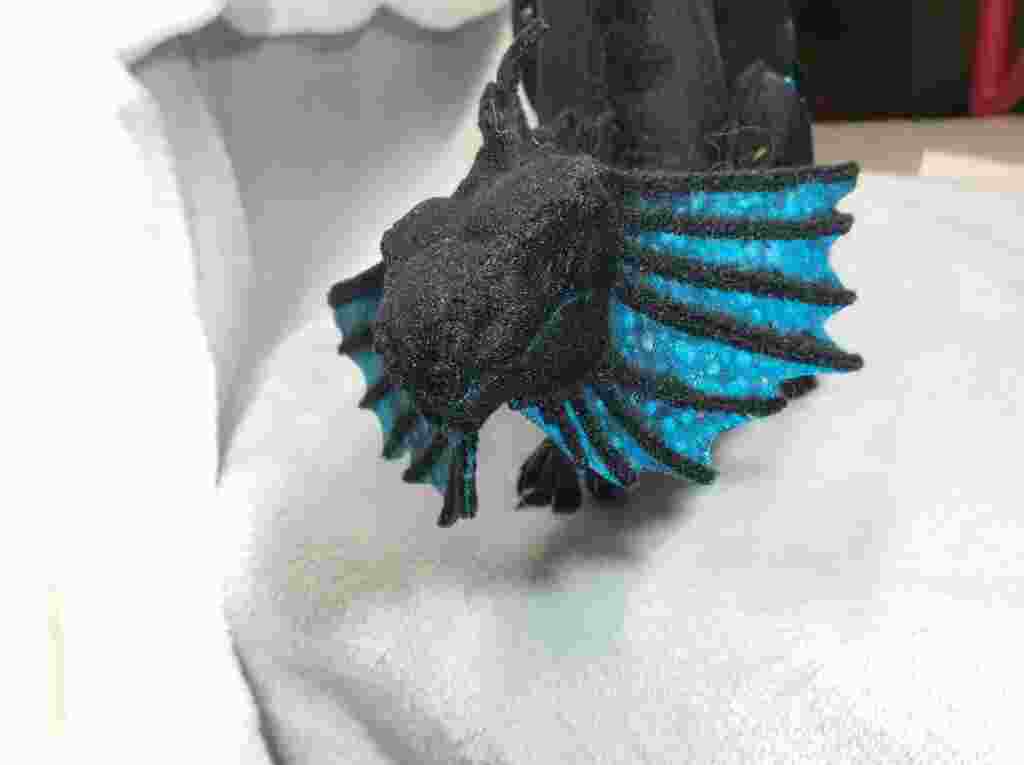
<p>That&#8217;s not actually why I bought the printer though; I got it to make dragons. I started small, and somehow these little ones have caught on and that&#8217;s most of what I sell on Etsy though not usually in holo-foil.</p>

<p><img src="images/IMG_3614.JPG" alt="Tiny sea dragon plushie" /> <img src="images/IMG_3611.JPG" alt="Tiny sea dragon plushie" /> <img src="images/IMG_3609.JPG" alt="Tiny sea dragon plushie" /> <img src="images/IMG_3610.JPG" alt="Tiny sea dragon plushie" /></p>

<p>My biggest challenge, as with most 3d printers, is printing stuff that&#8217;s larger than the bed, and that&#8217;s what I&#8217;ve been doing lately (with a detour to make the tiny critter above).</p>

<p><img src="images/IMG_3366.jpg" alt="Large velvet dragon sculpture work in progress" /></p>

<p><img src="images/IMG_3367.jpg" alt="Large velvet dragon sculpture work in progress" /></p>

<p><img src="images/IMG_3351.JPG" alt="Large velvet dragon sculpture work in progress" /></p>

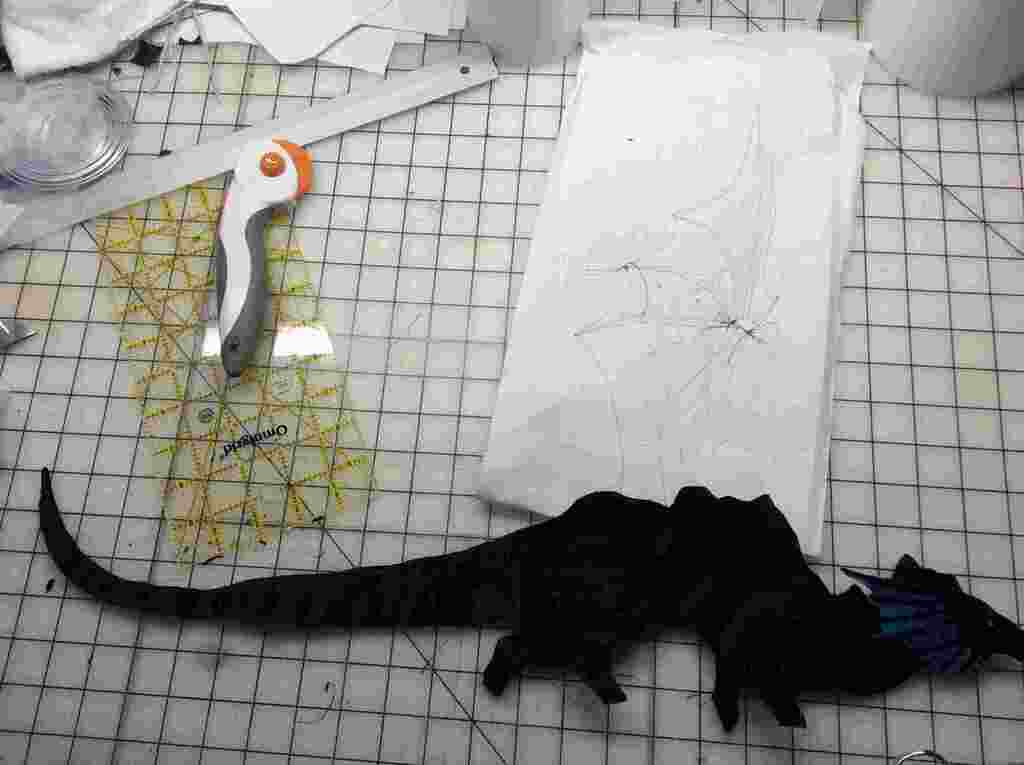
<p>The print bed is 5x7&#8221;, and that dragon is right around 24&#8221; long, with an eventual wingspan of a little more than that, so it&#8217;s been an interesting challenge. The previous largest print I&#8217;ve done is a leafy sea dragon (not to be confused with a leafy seadragon), around 12&#8221; tall.</p>

<p><img src="images/IMG2724Crop.png" alt="Velvet dragon sculpture on the seashore" /></p>

<p>It&#8217;s a little more expensive than the usual 3d printer (though nobody pays <a href="https://www.brother-usa.com/products/pe800">MSRP</a> of course), and a little harder to use, but I think they stand out from the usual ABS crowd.</p>

<p>(If you want the non-1995-artifact versions of the pictures, you can poke around <a href="https://silverseams.com/">my sewing blog</a> or <a href="https://mastodon.art/@silverseams">my mastodon.art account</a> or, if you don&#8217;t mind a silo, <a href="https://instagram.com/silver_seams">my Instagram</a>.</p>
]]></content>
  </entry>
  
  <entry>
    <title type="html"><![CDATA[Tilde is back!]]></title>
    <link href="http://tilde.club/~silver/2019-09-16-tilde-is-back.html"/>
    <published>2019-09-16T15:36:49-04:00</published>
    <updated>2019-09-16T15:39:13-04:00</updated>
    <id>http://tilde.club/~silver/2019-09-16-tilde-is-back.html</id>
    <content type="html"><![CDATA[<p>I has an excite: <a href="https://github.com/tildeclub/tilde.club/issues/90">Announce grand re-opening of tilde.club #90</a></p>
]]></content>
  </entry>
  
  <entry>
    <title type="html"><![CDATA[Ontology recapitulates phylology]]></title>
    <link href="http://tilde.club/~silver/2018-04-18-ontology-recapitulates-phylology.html"/>
    <published>2018-04-18T09:40:45-04:00</published>
    <updated>2018-04-18T09:40:45-04:00</updated>
    <id>http://tilde.club/~silver/2018-04-18-ontology-recapitulates-phylology.html</id>
    <content type="html"><![CDATA[<p>In the course of playing with the skunkworks project and parsing existing webpages, I reluctantly broke down and did some more learning on RDF. And stumbled into the standards I had somehow overlooked before and OH LOOK there&#8217;s an ontology that does what I need better than schema.org (with its very Google-y assumptions that you only need one-way links because of course you&#8217;ve already spidered everything and built your searchable database). And it&#8217;s over ten years old. Some of the discussion of it has already link-rotted - the author&#8217;s blog&#8217;s most recent entry invites discussion on a Google Wave. The core of it is alive and well, though.</p>

<p>Jumping on the bandwagon of a standard that old seems maybe counter-intuitive, but I think of it as going back to the point where everyone excitedly said, &#8220;Yes, all piling into the Facebook silo is a wonderful idea,&#8221; and taking the <em>other</em> option at that fork.</p>

<p>Eh, it&#8217;s worth a try anyway.</p>
]]></content>
  </entry>
  
  <entry>
    <title type="html"><![CDATA[Failed standards take II]]></title>
    <link href="http://tilde.club/~silver/2018-03-14-failed-standards-take-ii.html"/>
    <published>2018-03-14T22:48:49-04:00</published>
    <updated>2018-05-21T19:56:14-04:00</updated>
    <id>http://tilde.club/~silver/2018-03-14-failed-standards-take-ii.html</id>
    <content type="html"><![CDATA[<p>Into that fun point in the project where I turn it loose on urls in the wild and see if it can process something resembling structured data out of them.</p>

<p>I&#8217;ve discovered a corollary to the <a href="failed-standards.html">Failed Standards</a>: apparently some people implement schema.org stuff using a Google url that I guess used to redirect to schema.org? I don&#8217;t know if the standards are really the same or if Google forked them BECAUSE THEY DON&#8217;T EXIST ANY MORE but at any rate, using the current schema.org set seems to be compatible enough for my purposes (so far, displaying rich previews for links in Twitter or Mastodon updates).</p>

<p>Also: I know the name refers to providing data to embed the aforementioned previews, but it amuses me terribly that oEmbed is literally a format that cannot be embedded in the page it provides data for - it&#8217;s an API to fetch the info <em>in a separate transaction.</em> </p>
]]></content>
  </entry>
  
  <entry>
    <title type="html"><![CDATA[Failed standards]]></title>
    <link href="http://tilde.club/~silver/2017-10-27-failed-standards.html"/>
    <published>2017-10-27T20:27:49-04:00</published>
    <updated>2017-10-27T20:27:49-04:00</updated>
    <id>http://tilde.club/~silver/2017-10-27-failed-standards.html</id>
    <content type="html"><![CDATA[<p>| <a href="https://mastodon.social/@gamehawk/98902486209964923">I ❤️ how structured JSON relies on external definitions and everybody is like &#8220;we&#8217;ll store it at a big company like Google so it&#8217;ll never go away&#8221; and WHOOPS https://schemas.google.com is completely gone but somehow everyone is still using this mystery schema.</a></p>

<p>Seriously, putting <code>"rel": "http://schemas.google.com/g/2010#updates-from"</code> in your webfinger json is not doing any good when the server, including any presence on the Wayback Machine, is gone gone gone.</p>

<p>It&#8217;s amazing how OStatus has managed to even be implemented anywhere, what with the lack of documentation and all.</p>

<p><sup>crap I&#8217;m gonna end up writing documentation here aren&#8217;t I</sup></p>
]]></content>
  </entry>
  
  <entry>
    <title type="html"><![CDATA[Standards, and Mastodon, again]]></title>
    <link href="http://tilde.club/~silver/2017-10-25-standards-and-mastodon-again.html"/>
    <published>2017-10-25T08:59:27-04:00</published>
    <updated>2017-10-25T08:59:27-04:00</updated>
    <id>http://tilde.club/~silver/2017-10-25-standards-and-mastodon-again.html</id>
    <content type="html"><![CDATA[<p>I&#8217;m still sticking with Mastodon, as <a href="/~silver/2017-04-02-mastodon.html">I mentioned last spring</a>. Twitter is down to reply-only. And I&#8217;ve deleted (mostly) my Facebook account, though I&#8217;m pretty sure FB resurrected it when someone tried to log into it.</p>

<p>My biggest issue with Masto, technologically, is that it&#8217;s a pretty heavyweight critter to run for a single-user instance. So I&#8217;ve been playing around with the idea of minimum-viable instance, more as a way to wrap my head around the <a href="/~silver/2016-02-11-standards.html">standards it uses</a> than as an attempt at building a usable product. (But if that happens anyway, cool.) I think the most worthwhile thing I could end up with is a coherent set of documentation for the standards, though, because for instance as far as I can tell the Salmon protocol&#8217;s specification only lives in a Wayback machine archive of a Google Code site (<a href="https://web.archive.org/web/20160402075817/http://salmon-protocol.googlecode.com/svn/trunk/draft-panzer-salmon-00.html">Salmon spec</a> and <a href="https://web.archive.org/web/20160506073138/http://salmon-protocol.googlecode.com:80/svn/trunk/draft-panzer-magicsig-01.html#mpki">magic-signature spec</a>).</p>
]]></content>
  </entry>
  
  <entry>
    <title type="html"><![CDATA[Mastodon]]></title>
    <link href="http://tilde.club/~silver/2017-04-02-mastodon.html"/>
    <published>2017-04-02T17:34:15-04:00</published>
    <updated>2017-04-04T13:40:46-04:00</updated>
    <id>http://tilde.club/~silver/2017-04-02-mastodon.html</id>
    <content type="html"><![CDATA[<p>I mentioned OStatus/GnuSocial about a <a href="2016-02-11-standards.html">year ago</a>, as something I was keeping an eye on. I signed up for <a href="https://mastodon.social">mastodon.social</a> awhile back, and gradually started using it more and more.</p>

<p>When I first signed up, it was mostly LGBTQ and furry. That is, people who left Twitter looking for a safe space. And then Twitter made the already infamous @reply change, and the floodgates opened. Just the flagship instance has increased its userbase by 20% in the space of 24 hours or so.</p>

<p>It will be interesting to see if adoption reaches critical mass. Right now all the conversation on masto is <em>about</em> masto, which doesn&#8217;t exactly build a community.</p>

<p>If you&#8217;re interested, I&#8217;m <a href="https://mastodon.social/@gamehawk">gamehawk</a>.</p>

<p><em>Update: <a href="https://instances.mastodon.xyz/">https://instances.mastodon.xyz/</a> has a running list of instances, since the main instance is kind of swamped. In hindsight, Eugen should have made a separate homepage/site for the federation than for the flagship instance.</em></p>
]]></content>
  </entry>
  
  <entry>
    <title type="html"><![CDATA[If nothing else, current events have provided me with the round tuit to encrypt stuff]]></title>
    <link href="http://tilde.club/~silver/2016-11-22-if-nothing-else-current-events-have-provided-me-with-the-round-tuit-to-encrypt-stuff.html"/>
    <published>2016-11-22T20:28:14-05:00</published>
    <updated>2016-11-22T21:39:15-05:00</updated>
    <id>http://tilde.club/~silver/2016-11-22-if-nothing-else-current-events-have-provided-me-with-the-round-tuit-to-encrypt-stuff.html</id>
    <content type="html"><![CDATA[<p>Let&#8217;s see if plerd eats the key block here.</p>

<pre><code>-----BEGIN PGP PUBLIC KEY BLOCK-----
Version: GnuPG v1

mQENBFVXuRkBCACnIOQDvv7edQXTgkSwq/Udp2rZQA0920EBksD8ydHZCVs7ZksG
CpGT+LU4uLe+74T2Y1O5px2C0HMDZwuBPni+Fq27KGN9tiCbjxGVirdWORqrYdot
WvH+ynBA0uhAn8K8UHgxDe45b+cTFEZPAVJ9PiOFqBpd6S55nPTpYJz51rYIHbmN
+JRdHcaeVJ2dXoXj2RwkMFDCUEzXNImOhGwnfU+tsQLfx2dzFkXK9s+1rnxi2my2
91iyG51srcwVzidd9lSjjG5B4TIxmMfGAHpu0TA7bSuGmPz/lIDpnpPNJl8hQvfC
xldmQFNdHd6vEwhG5B8r+EGaeIkIl5hfrjOjABEBAAG0JEthcmVuIEogQ3JhdmVu
cyA8c2lsdmVyQHBob2VueXgubmV0PokBOAQTAQIAIgUCVVe5GQIbAwYLCQgHAwIG
FQgCCQoLBBYCAwECHgECF4AACgkQDiPvFjZ28yoK9QgAgZhK5VS6klyVodZ30zqI
VagVte39SeWnCxlW9NtmAjF5hgxRHyTlxs1Q+dvIgs6n6d4TGuz5loe0eAFUeq9F
YaP5ZTAd2r2F3BGxRgUsZzZ7lecmRPIQ/OvGZP7pvG1r6OrFkeBGXXfyoMHmyHBA
ggjI7zLx5uiyQKmkx/WavTZVQbjt2dB1htaRsfD8sQqBHl7N91F9YlTVju5jm85s
Ez3n7wKxhzfM5YCqf58CdOZYDrtkGbiCbW/bg91dcLxFj72/dRn4XTzs5oe51nmZ
uYeV9S6oFqzu8RxTE2YzGR2ORxMwPoa91OhU29paz8IXcaVi6hddzVJ3I4jL+Cnn
07kBDQRVV7kZAQgAssViY2ndNG75uXGMFmC7PwkEvKQY8azPPKwo6/EOIP2Cw+SC
KZZk+DDIGvPg4TNc98t50WCmBoelVYWhRtquIfDrSx2Q7UFTZIbTfJKvXTn58rDM
3TK790vKfev8gjW5+c+LWQKLXyfXUaGdanrt1KExWUnk3tsbxXN/OFytE2EJMDJO
JeGBchGhZVS2GnynFTUjpyGY0i0LEvkbStkR5LYWNtHgEMc2GRUDG2AXInzCuVN8
Asw3QaGI8dIJ5+EW0Z31cmlS7Q2n4EFHu+GROEGzaFCaMPwPzFWgcksiNAmKYKms
MdDRucb/89+C3swOdPxnZDNNAiIhy1SfPgwEBwARAQABiQEfBBgBAgAJBQJVV7kZ
AhsMAAoJEA4j7xY2dvMq+hoIAJC/gZFSfzFVRjuOvmC+yKBQkpalVwsM4eKe2L+e
Cz7U1mgvsLmG7iZ/6KswHBr9y8FfKAPHNfuonYKs7f4vv6+zMaQfPy4birNsXfOg
PDlRABQuea2smVF6PJ1TgKt612GjFVPwZ2CD6t7Run/EUZOafi1u7dQy6yLipBjY
hyFIHyazJZ+3572ptKp4qVK9OD1dO7YgCIN0CRdgud0G/gcsjX/gVBhBiuzSSx2j
yigcB7g2DsrDHGMmKXgsklCi3ZOTX/hAvrVDV5D177HeKxSbBgoIXlca+SoqMAPa
PfkiROqURQR0ypNP97OYehOKwjcMJdrMyH8ygSAr1pIuxBg=
=Hch0
-----END PGP PUBLIC KEY BLOCK-----
</code></pre>

<p>I&#8217;m <a href="https://keybase.io/gamehawk">gamehawk on keybase</a>, though I haven&#8217;t figured out how to keep my Twitter account verified there since my account is private these days.</p>
]]></content>
  </entry>
  
  <entry>
    <title type="html"><![CDATA[Facebook has certainly locked the doors pretty well]]></title>
    <link href="http://tilde.club/~silver/2016-11-12-facebook-has-certainly-locked-the-doors-pretty-well.html"/>
    <published>2016-11-12T20:06:35-05:00</published>
    <updated>2016-11-12T20:06:35-05:00</updated>
    <id>http://tilde.club/~silver/2016-11-12-facebook-has-certainly-locked-the-doors-pretty-well.html</id>
    <content type="html"><![CDATA[<p><img src="images/Lockbook.jpg" alt="Locked book" /> </p>

<p>Some while back, Facebook <a href="https://m.facebook.com/DelanoWichita/pages_feed/">borked the Pages feed</a> where you could read all the entries from Pages that a Page liked. I suspect this wasn&#8217;t accidental - if you wanted to read all entries from Pages you followed, you could just create your own Page, <code>like</code> everything you wanted to follow, and read the Pages feed. Lifehack! Otherwise you only saw a tiny percentage of any given Page&#8217;s posts.</p>

<p>However, I used it in that specific example to follow all the businesses and churches and organizations in the Delano neighborhood, and re-share any important news, add any events to the calendar, etc. My Page follows over 200 other Pages, and ain&#8217;t no way I&#8217;m manually checking each one. So I pulled up <a href="https://metacpan.org/pod/Facebook::Graph">Facebook::Graph</a> and later <a href="https://metacpan.org/pod/Facebook::OpenGraph">OpenGraph</a> and scraped the JSON for each Page. Next, I parsed the current entries into a quick-and-dirty preview page. It&#8217;s not a replacement for FB proper, but it gives me enough to decide which posts to click through to.</p>

<p>I figured I&#8217;d do roughly the same thing here, except for Users instead of Pages. Only&#8230; if I&#8217;m reading this right, the Graph API doesn&#8217;t allow that anymore unless each individual user has allowed the application to serve their feed. Unless I&#8217;m missing something, the Graph won&#8217;t work for me.</p>

<p>This makes life a little more awkward, but isn&#8217;t a dealbreaker. The only reason I&#8217;ve tolerated Facebook as long as I have has been <a href="http://www.fbpurity.com/">FB Purity</a>, a browser plugin that Facebook hates so much you know it&#8217;s good. (Seriously: you can&#8217;t mention it in a post you want other people to see at all, much less link to it.) FBP doesn&#8217;t use the API, it just makes requests same as FB&#8217;s own Javascript does. And bless Steve&#8217;s good heart, his code is unobfuscated and well commented, so it practically documents how to do everything through Facebook&#8217;s ajax. Sweet!</p>

<p>Installing a browser extension is still a little more friction than I wanted, especially given that you can&#8217;t get FBP anywhere other than its site because Facebook has made sure it doesn&#8217;t get listed by Mozilla or anybody else. But once over that hump, it does have the potential to make all <em>kinds</em> of things Just Work™&#8230; invisibly.</p>
]]></content>
  </entry>
  
  <entry>
    <title type="html"><![CDATA[How to destroy Facebook]]></title>
    <link href="http://tilde.club/~silver/2016-11-12-how-to-destroy-facebook.html"/>
    <published>2016-11-12T12:00:24-05:00</published>
    <updated>2016-11-12T12:00:24-05:00</updated>
    <id>http://tilde.club/~silver/2016-11-12-how-to-destroy-facebook.html</id>
    <content type="html"><![CDATA[<p>Somehow, in the software changes here, I unlinked the older blog entries about the <a href="2016-11-12-we-have-to-destroy-facebook.html">Facebook Killer</a> and never got around to re-linking them. That&#8217;s okay, they were pretty rambly and this gives me an excuse to sum up what I have so far. I jokingly have code-named the project Pumpkin Spice Latte, for reasons which now escape me other than you can tell the time of year I named it. Here&#8217;s what it needs, in semi-particular order:</p>

<h3>Ease of use</h3>

<p>You log in, you type in a box. You click &#8220;like,&#8221; on your friends, relatives, businesses, posts, whatever. At its simplest, that&#8217;s <em>it</em>. Anything that replaces Facebook has to be that easy. That&#8217;s no big deal - that&#8217;s just really basic blogging software.</p>

<h3>There&#8217;s a &#8220;there&#8221; there</h3>

<p>Once you&#8217;ve &#8220;liked&#8221; something on FB, it (or things like it) shows up in your timeline/wall/whatever it is this week, simple as that. Posting is, for most people, secondary to <em>reading</em> other people&#8217;s posts. That&#8217;s a slightly bigger deal, but not much - that&#8217;s just really easy-to-use feed reading. Subscribe new users to all of their FB friends, and the critical mass is there.</p>

<h3>Federation</h3>

<p>Replacing one Facebook with another is no good. There will certainly have to be hosted PSL instances for ease-of-use, but you have to be able to click on a button and move all your stuff from one host to another, bam.</p>

<h3>Unambigious identification</h3>

<p>Facebook has a problem with spammers cloning users. I used to get regular friend requests from clones of my mother (until I, um, unfriended her for political reasons), and if you can click one button and move to a new host your friends have to be able to tell the difference between you doing that and you just being cloned. You&#8217;ll have to be able to identify yourself with a public/private key setup of some sort (but see also &#8220;ease of use&#8221;).</p>

<h3>Social games</h3>

<p>Come on, we&#8217;ve had <a href="https://en.wikipedia.org/wiki/BBS_door#Door_games">BBS door games</a> since the 80&#8217;s. We <em>got</em> this.</p>

<h3>Open-sourcey stuff</h3>

<p>There is a <a href="2016-09-22-ticking-off-the-ticky-boxes.html">whole host of under-the-hood features</a> that will be important to us nerds. I think they&#8217;re important for <em>implementing</em> the above, but they wouldn&#8217;t necessarily appeal to the canonical user.</p>

<h3>Complications</h3>

<p>&#8220;Just&#8221; feed-reading is complicated by FB eliminating its RSS feeds a long time ago, and putting TOS restrictions on its API to prevent this kind of thing. If PSL and similar things really took off, it would quickly become whac-a-mole as FB tried to block ways of offline reading.</p>

<p>People need some incentive to move. Luckily, Facebook provides some of that all by itself: people get annoyed that they can&#8217;t control whether they see everything family members post. People get annoyed by ads. People get annoyed by Facebook re-sorting their timeline.</p>

<p>Spam and phishing and bullying and everything else that comes with a social network needs a lot of careful control. On the down side, there&#8217;s no central authority to ban someone, but on the up side, you don&#8217;t need to rely on a central authority to ban someone&#8230; provided you have tools to give you enough control over your experience.</p>
]]></content>
  </entry>

  
</feed>